According to U.S. News & World Report, between 1,800 and 2,000 people attempt to thru-hike the Pacific Crest Trail (PCT) each year, but only a little over half finish. Stretching from Southern California to Canada, this national landmark brings people from around the world to experience a challenging yet breathtaking wilderness adventure. If you're planning a visit to the Pacific Coast and think you might have what it takes to explore America's second-longest trail, check out these preparation tips to help ensure your successful hike.
What Is the Pacific Crest Trail?
The Pacific Crest Trail is a long-distance hiking and equestrian trail winding through the states of California, Oregon, and Washington. Officially designated as the Pacific Crest National Scenic Trail, this world-renowned route features approximately 2,650 miles of walkable terrain and is a popular attraction for avid hikers and nature ramblers alike. With a variety of sights ranging from snow-topped mountains to desert wilderness, this backpacking paradise passes through seven national parks, including:
- Kings Canyon
- Sequoia
- Yosemite
- Lassen Volcanic
- Crater Lake
- Mt. Rainier
- North Cascades
Hikers to the Pacific Crest Trail either opt to explore it in sections or follow the long-distance route from end to end. Known as thru-hikers, these more experienced nature enthusiasts typically complete the PCT in 5-6 months, though some experts explore it in full in as little as two months. But no matter how long you plan to spend in the wilderness, the Pacific Crest Trail Association suggests that thru-hikers should budget between 6-8 months to plan and train for their trips.
Useful Tips for PCT Hikers
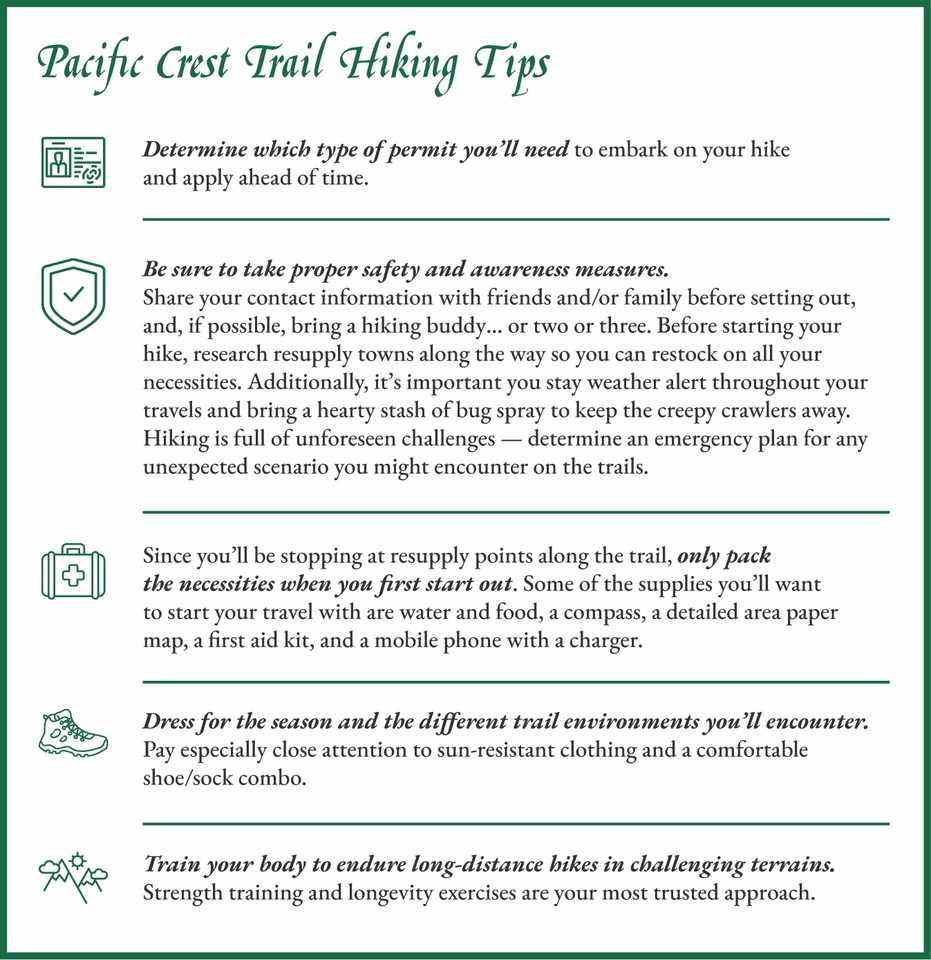
If you're embarking on a thru-hike — or even a segment hike — of the PCT, preparation ahead of time is key for a safe and enjoyable outdoor experience. For beginner and experienced hikers alike, the following tips can help ensure that you make the proper arrangements for your scenic hike.
Secure your permit ahead of time
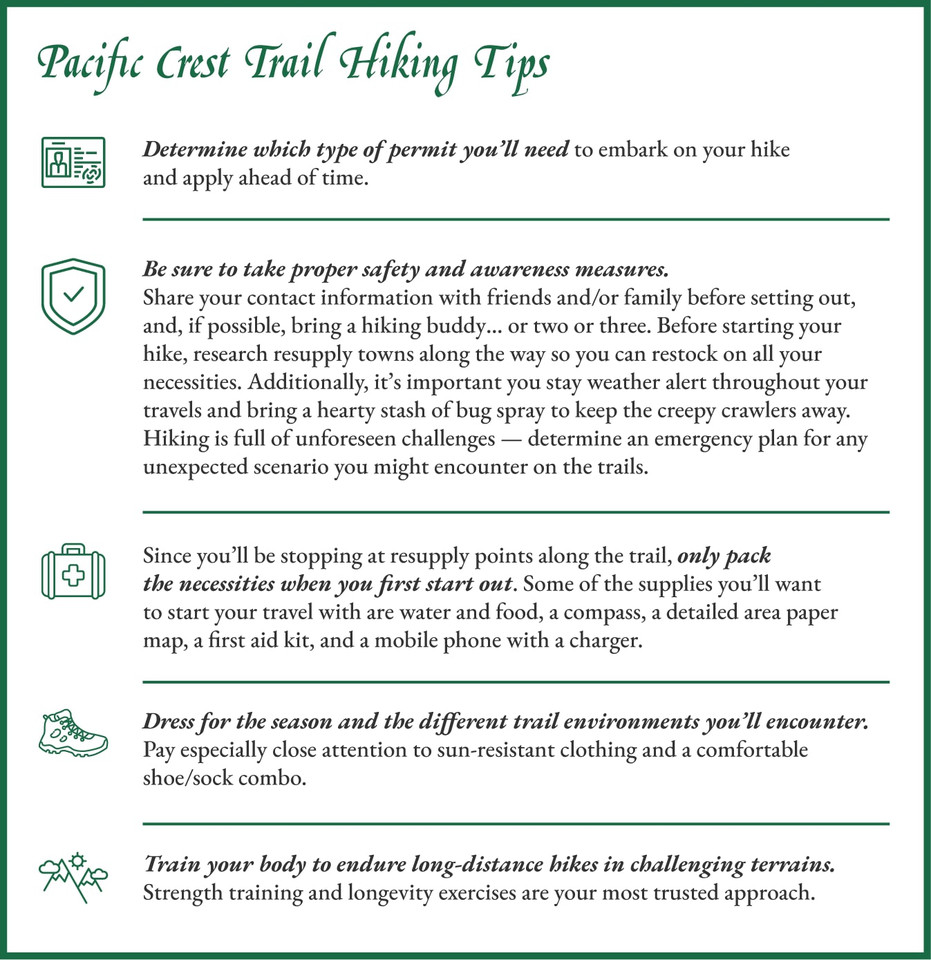
Since the Pacific Crest Trail winds through state and national parks, obtaining a permit is required to hike just about any section of the path. Before you set out on your hike, you'll need to determine which type of permit is needed to complete your trek. Backpackers intending to hike just a section of the PCT typically only need permits designated for hikes 500 miles or less, and these can often be found for free or at a nominal cost at the trailhead. Thru-hikers traveling more than 500 continuous miles, on the other hand, will need to apply for an interagency Long-distance Permit, which also grants permission to camp along the trail.
Depending on where you're hiking, you may also need to acquire additional permits. For example, hikers traveling through California will also need a free California Fire Permit, which allows you to operate a camp stove when cooking meals. Regardless of what type of permit your hike requires, it's important to do your research and apply ahead of time to receive permission in time for your trip.
Take safety and awareness precautions
When on the trail, safety awareness is one of the best lines of defense against nature's elements. Inclement weather, injuries, and supply shortages are not uncommon on California hikes, so it's best to anticipate any risks you may encounter along the way. Some safety and compliance steps that are paramount to a successful hike include:
- Sharing your contact information with someone you know before you head out
- Bringing a hiking companion or hiking in a group
- Establishing attainable places to reach your resupply points while on the trail
- Staying weather alert and checking forecasts ahead of time to avoid dangerous conditions
- Investing in bug spray repellant to prevent sickness or negative reactions
- Having an emergency plan covering various scenarios (injury, illness, equipment malfunction, etc.)
Pack the essentials
The supplies you pack largely depend on how many days you plan to spend on your hike, as well as the time of year and where you will be sleeping. If you intend to thru-hike the PCT, you likely won't be carrying months of supplies when you first begin. In fact, resupply points are towns or post offices along the way that can serve as a temporary stop to restock all your necessities — just be sure to ship your resupply boxes before you set out.
To reduce physical strain and ensure you always have enough packing room, you'll want to start your hike with only the short-term essentials. Some of the necessary supply items you'll need to begin your hike include:
- Water and food
- Compass
- Detailed area paper map
- First aid kit
- Light source
- Pocket knife
- Cash (some stores do not take credit cards)
- Toiletries, including sunscreen
- Mobile phone with charger
Dress appropriately
When selecting the appropriate clothing to wear on your hike, consider the season you are setting out in and the different trail environments you'll encounter along the way. While spring and fall seasons in the mountains may call for long-sleeved shirts and windproof jackets, summer hikers will want to opt for breathable clothing to keep sweat off the skin. But no matter the season and climate you decide to hike in, you'll always want to ensure that you reduce the impact of sun exposure on your skin. Large-brimmed hats, sunglasses, and lighter colors can help deflect harsh sun rays from your body and ultimately lead to a more comfortable journey.
In addition to taking precautionary measures against sun exposure, you'll also want to choose the right shoe and sock combination. Because blisters can ruin an otherwise perfect hike, comfortable yet robust hiking shoes and general-purpose hiking socks are recommended. To be sure that you select the appropriate footwear, visit your local outdoor shop to be fitted for boots that are right for you.
Get in shape
Typically, it can take your body anywhere from three weeks to three months to witness a significant improvement in your fitness levels. When embarking on your long-distance hike of the Pacific Crest Trail, you'll want to prepare your body well in advance for miles of strenuous treks at high inclines. While you may be tempted to focus on boosting just your leg strength, strong abdominal muscles, back muscles, and pelvic muscles give you balance and flexibility — helping you stay the course longer.
Some of the pre-hike strength training and longevity exercises that can equip you with the endurance you'll need on the Pacific Crest Trail include:
- High-intensity interval training (HIIT)
- Crunches, bridges, and planks
- Practice walks on hilly terrains with your backpack
- Yoga routines for stress reduction and physical flexibility
Frequently Asked Questions
How close is Carmel to the Pacific Crest Trail?
While the PCT runs through the Sierra Nevada east of Carmel, the Monterey Peninsula offers excellent training hikes and serves as a perfect rest stop for long-distance hikers exploring California.
What local trails prepare you for longer hikes like the PCT?
Garland Ranch Regional Park offers challenging elevation gain, and Big Sur's trails provide rugged coastal terrain; both are excellent for building endurance.
When is the best time to hike in the Carmel area?
Spring and fall offer ideal hiking weather with mild temperatures and clearer skies. Summer can bring coastal fog, while winter sees occasional rain.
What gear do I need for hiking near Carmel?
Layers are essential for changing coastal conditions. Bring water, trail snacks, a map, and sturdy hiking boots for rocky terrain.
Can PCT hikers rest and resupply near Carmel?
The Monterey Peninsula offers full services for hikers needing a comfortable bed, hot shower, and good meals before continuing their journey.
Plan Your Stay at Carmel Green Lantern Inn
Whether you're a day hiker or a thru-hiker, Carmel Green Lantern Inn can be your resting point from a day's worth of outdoor adventures. Carmels Inn is nestled in a quaint neighborhood with a laid-back community feel and features 17 cozy rooms for you to recharge in peace. Contact us today to learn more about our specials and how we can help accommodate your trip to the Pacific Crest Trail.